Basement waterproofing in Stoneham, MA is planned work for a basement that leaks, seeps or smells damp. The approach depends on where the water is coming from. A leak at a floor-wall joint, a crack in a poured wall, a damp block wall and a high water table each need a different fix.
This page explains how we diagnose the problem, the main methods and what each does, and what a homeowner can do to reduce water outside the foundation. It carries a standard title, since waterproofing is planned. If your basement is flooding now, see sump pump service and call the 24/7 line.
Where basement water comes from
Water enters a basement in a few ways. Surface water from roofs and grading runs toward the foundation. Groundwater rises under the slab when the soil is saturated. Water pushes through cracks, joints and porous masonry, and plumbing leaks inside the walls add their own.
| What you see | Likely source | Typical fix |
|---|---|---|
| Water at the floor-wall joint | Groundwater pressure under the slab | Interior perimeter drain and sump pump |
| Vertical crack in a poured wall | Settlement or shrinkage, water pushing through | Crack injection, exterior drainage if needed |
| Damp, chalky block wall | Moisture moving through masonry, efflorescence | Grading, gutters, interior drainage, sealant |
| Puddles after heavy rain only | Surface water and poor grading | Downspout extensions, regrading, sump |
| Constant dampness, no rain link | A plumbing leak or condensation | Leak detection, dehumidification |
Dealing with basement waterproofing in Stoneham? A real dispatcher answers, day or night.
Call (339) 216-9771Outside first: gutters, downspouts and grading
The cheapest waterproofing is keeping water away from the house. Gutters should be clear, and downspouts should discharge several feet from the foundation. The soil near the house should slope away rather than toward it.
A basement that only leaks after a heavy rain often improves a lot from these two changes. If you have already done them and water still comes in, the problem is groundwater, and the fix moves inside.
Interior drain systems and sump pits
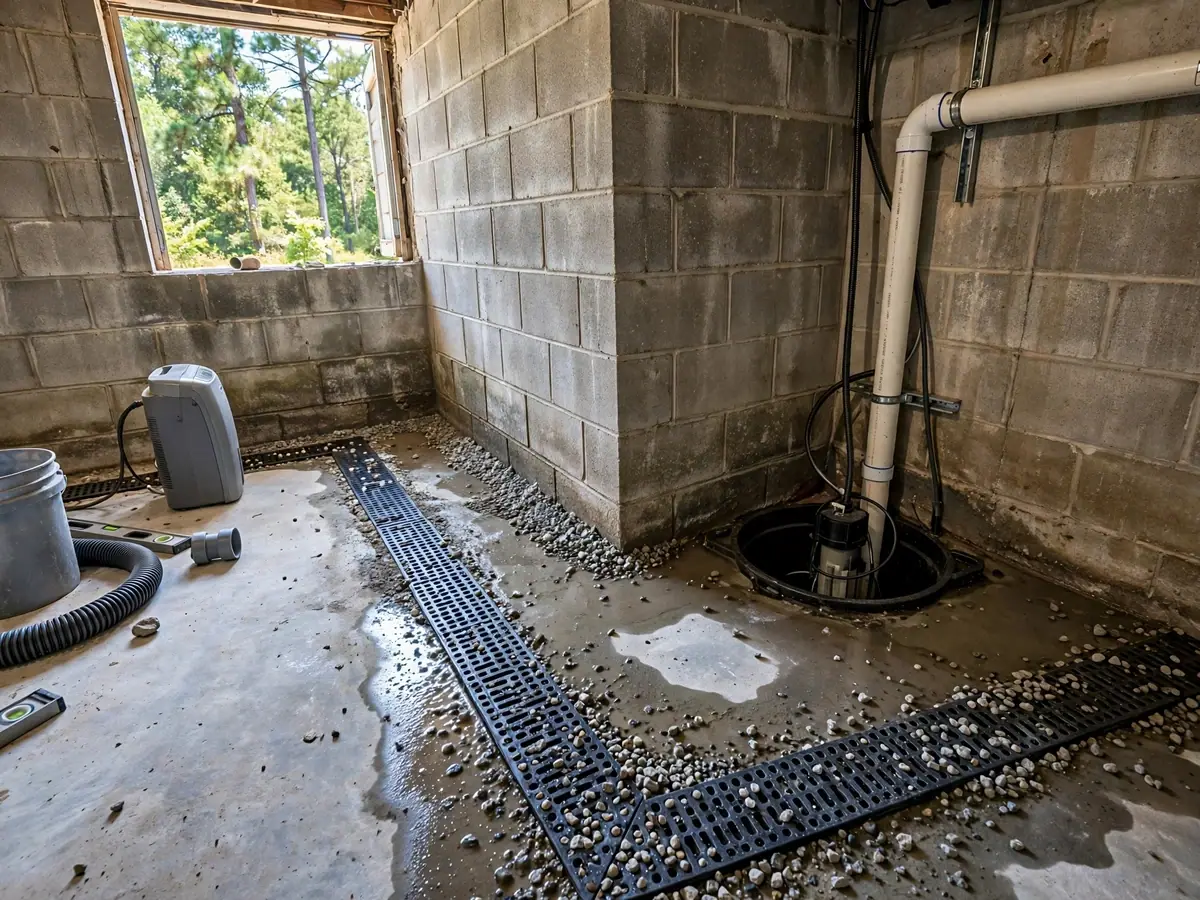
An interior drain system collects water at the edge of the basement floor, where the slab meets the wall, and sends it to a sump pit. A trench is cut in the floor along the wall, a perforated pipe is set in gravel, and the concrete is patched over. The water goes into the pit and is pumped out.
The system works because it relieves the pressure and carries water away before it reaches the finished floor. It does not keep water out of the soil, so the sump pump is part of the system. See the sump pump page for pumps and battery backups.
Cracks, sealing and what does not work
Poured concrete cracks can be injected with epoxy or polyurethane, which seals the crack from the inside. It works on a crack with a known cause and without ongoing movement. Paints and coatings sold as waterproofing can hide dampness for a while but often peel when water pressure pushes behind them.
We tell you honestly if a product is a cosmetic fix and not a solution. For some cases, a landscaper or a foundation specialist is the right person, and we say so.
Stoneham basements and groundwater
Public housing data put the typical Stoneham home at around the late 1950s, and many are older. Foundations of that age are commonly poured concrete or concrete block, and the soil conditions vary around town. Stoneham sits near Spot Pond and the Middlesex Fells, and areas near wetlands or lower ground can have a higher water table in spring.
If your basement is finished or you plan to finish it, solve the water first. Carpet, drywall and wood framing hold moisture and feed mold. A dehumidifier is a helpful support, and it is not a substitute for drainage.
What affects the price of basement waterproofing
Source and extent of the water
A single crack costs far less than a drainage system along every wall.
Method
Crack injection, interior drain and pump, and exterior work are very different jobs.
Foundation type
Block, stone and poured concrete respond differently.
Finished space
A finished basement needs more protection and repair when the floor is opened.
Pump and backup
A sump pit, pump and battery backup add to the scope and give the system its safety margin.
Insurance usually does not cover waterproofing. Water damage from a sudden plumbing failure may be covered, but groundwater seepage often is not. Read the policy and ask about a water backup endorsement.
Drain and pump work in a waterproofing system falls under 248 CMR, and the Massachusetts State Building Code applies to finished basement space.
Want your real number? Call (339) 216-9771 and describe the problem. You get a clear price before work starts.
Frequently asked questions
A plumber or a specialist traces it by looking at where and when it appears. Water after heavy rain suggests surface or groundwater. Constant moisture can mean a plumbing leak or condensation.
If water comes in at the floor-wall joint or from several spots, an interior drain with a sump pump is often the right fix. A single crack may only need sealing.
Usually not. Paint can hide damp spots but often fails when water pressure pushes behind it.
A crack repair takes hours. An interior drain system commonly takes a few days, depending on the length of the walls and the floor finish.
Call the 24/7 line. A pump or a temporary fix may be the first step, and waterproofing is planned after the emergency.
Ready to talk through your basement waterproofing problem? Call the 24/7 line.
Call (339) 216-9771