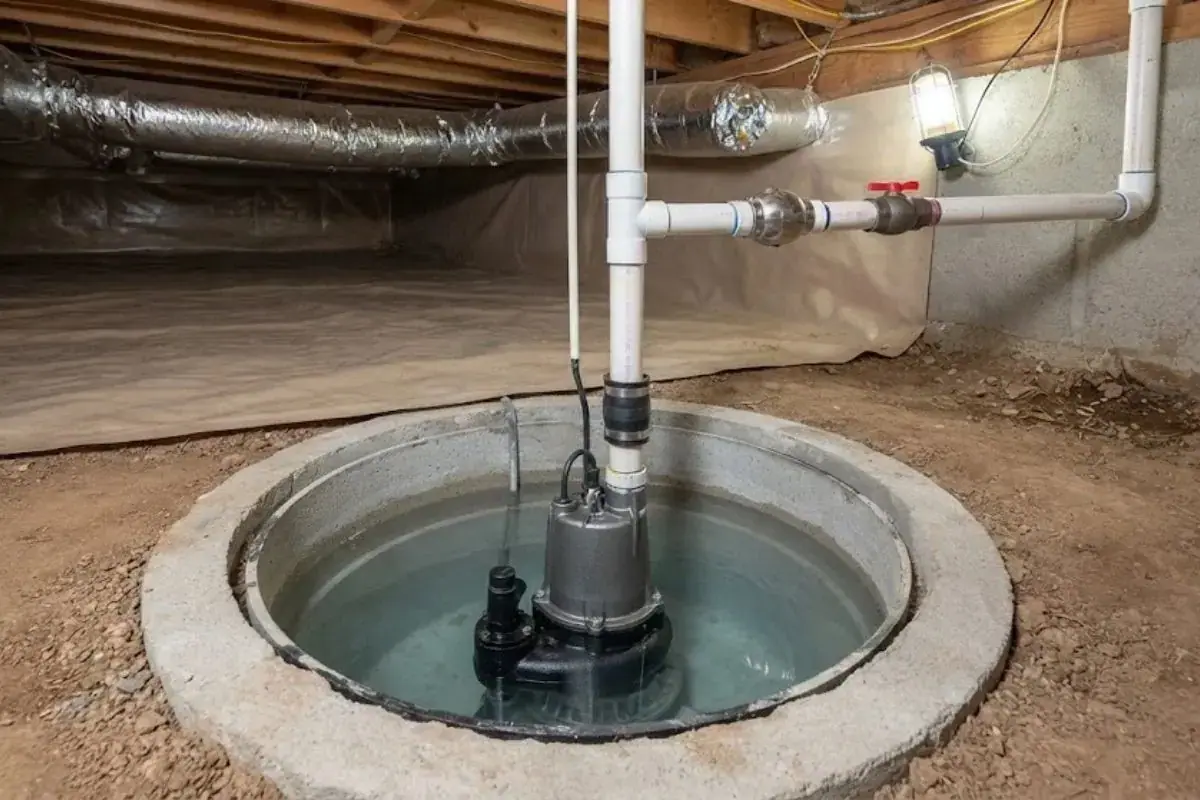
Emergency sump pump service in Stoneham, MA matters most during a heavy rain, a fast snowmelt or a power outage, which is when pumps are needed and when they most often fail. A pump that runs constantly, will not start, or is making noise is telling you something before it fails.
This page covers the common failures, how a replacement is done, and how a battery backup protects you when power goes out. It also explains how a sump pump fits into the bigger picture of a wet basement. If water is already coming in, jump to the urgent section.
Basement taking on water: first steps
Standing water in a basement is both a property risk and a safety issue, because of electrical outlets and appliances. Our line is open 24/7, including during storms.
Here is what to do.
- Stay out of the water if it is near outlets, the panel or appliances, and shut off power at the breaker only if you can reach the panel dry.
- Check that the pump is plugged in, the breaker has not tripped, and the float moves freely in the pit.
- Pour a bucket of water into the pit to see if the pump starts.
- Move valuables up, and use buckets or a wet vacuum to limit spread if it is safe.
- Call the 24/7 line and tell the dispatcher whether the pump runs, hums or is silent.
Dealing with sump pump in Stoneham? A real dispatcher answers, day or night.
Call (339) 216-9771Why sump pumps fail
A sump pump sits in a pit that collects groundwater from drain tile or from under the slab. When the water rises, a float switch turns the pump on and it sends water out through a pipe to the yard or a storm drain. Each part can fail.
| Symptom | Likely cause | Fix |
|---|---|---|
| Pump will not start | No power, tripped breaker, stuck float or failed switch | Check power, free the float, replace the switch or pump |
| Hums but does not pump | Clogged impeller or a seized motor | Clear the intake, replace the pump |
| Runs constantly | Stuck float, failed check valve or very high groundwater | Reposition the float, replace the check valve |
| Runs but does not move water | Clogged discharge line, frozen pipe, or a broken check valve | Clear and thaw the line, replace the valve |
| Loud noise or vibration | Debris in the pit, worn bearings | Clean the pit, replace the pump |
| Short cycling | Pit too small or float set poorly | Adjust, or install a larger pit |
Replacement and installation
Most pumps last around 7 to 10 years. If yours is older and has started acting up, replace it before the storm that breaks it. A new pump, a new check valve and a fresh float are inexpensive compared with water damage.
A new installation starts with the pit. If you have no pit, a hole is cut in the slab, a basin is set, and the discharge line is run to the outside. The discharge must send water far enough from the foundation that it does not just run back toward it.
Battery backup and water-powered backup
A sump pump needs power, and storms often cause outages. A battery backup pump runs on a deep-cycle battery and takes over when the main pump fails or the power is off. The battery lasts hours, not days, and needs replacement every few years.
Some homes with municipal water can use a water-powered backup, which runs on water pressure and needs no electricity. It uses a lot of water while running, and it must be allowed by the local water rules. Ask us which type fits your home and your discharge setup.
- Test the main pump every few months by pouring water into the pit.
- Test the battery backup at the same time.
- Clean the pit of debris once a year.
- Check the discharge outlet outside for blockage and freezing.
- Replace the check valve if it clatters when the pump stops.
Where the discharge should go
Stoneham's Public Works department says it works to reduce stormwater and groundwater getting into the sewer system. For homeowners, that means a sump pump should not be connected to the sanitary sewer in most cases.
Rules for sump discharge differ by town, so ask the Stoneham Building Division or Public Works what is allowed at your address. We install the discharge line to the outside, away from the foundation and neighbors, and tell you if the layout needs a different approach.
A pump is one part of a dry basement
Pumps handle water that reaches the pit. They do not stop water from entering in the first place. If your basement takes in water often, or has stains, efflorescence or damp walls, a pump is a patch and not a cure. See our basement waterproofing page for interior drains, wall sealing and grading.
Public housing data put the typical Stoneham home at around the late 1950s. Houses of that era often have older foundations with some cracks and a basement floor that is less tight than a modern slab. We look at how water gets in, not only how it gets out.
What affects the price of sump pump
New pump or repair
A replacement of the pump alone is quick. A new pit and discharge line take more work.
Pump type
A higher horsepower pump or a battery backup system adds cost.
Discharge route
A short run through a rim joist is easy. A long run or one through a finished wall costs more.
Slab cutting
A new pit means cutting concrete, which adds time and dust control.
Time of day
Emergency dispatch is 24/7, and the price is given before work starts.
Standard homeowner policies often exclude groundwater and sump pump failure unless you add a water backup endorsement. Check your policy before a storm and keep photos of the pit and the pump.
Sump discharge and pump piping fall under 248 CMR, and the electrical connection must meet the electrical code.
Want your real number? Call (339) 216-9771 and describe the problem. You get a clear price before work starts.
Frequently asked questions
Yes. The line is open 24/7, including during storms. A dispatcher will help you with safe first steps and book the earliest visit.
Pour a bucket of water into the pit. The float should rise, the pump should start, and the water should drain out through the discharge line.
Commonly 7 to 10 years, depending on how often it runs. Replace an older pump before the wet season.
If a power outage during a storm would leave your basement at risk, yes. It keeps the pit pumped for hours.
In most places, no. Check with the Stoneham Building Division or Public Works before choosing a discharge route.
Ready to talk through your sump pump problem? Call the 24/7 line.
Call (339) 216-9771