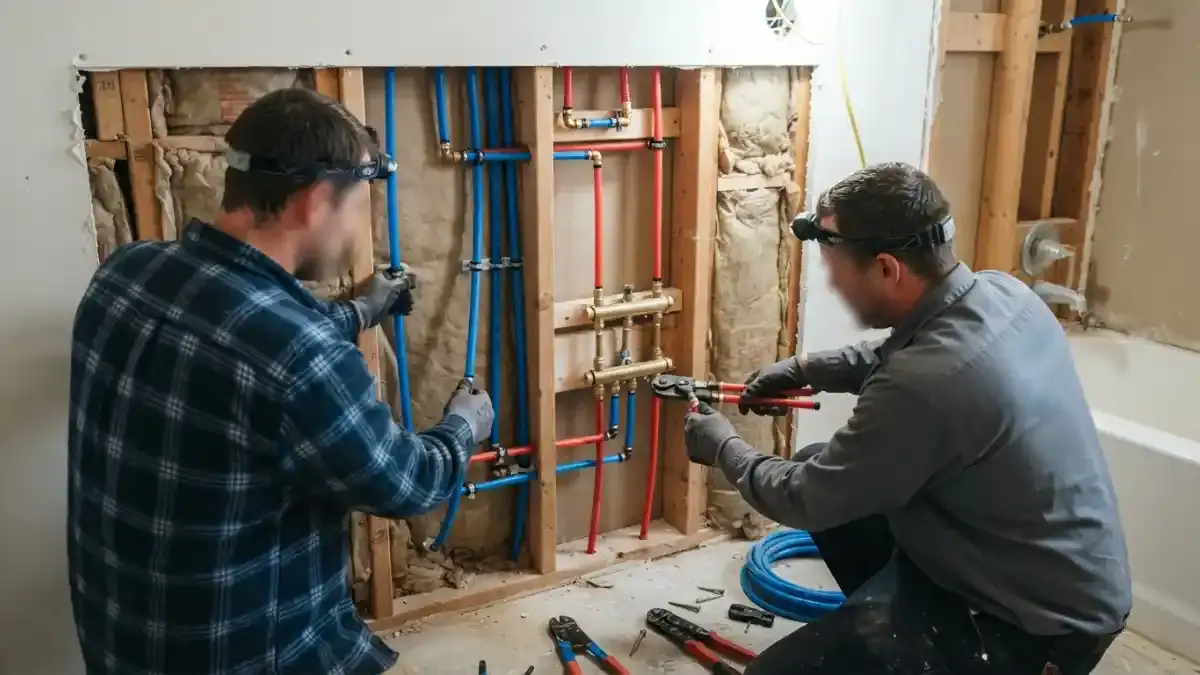
Repiping in Stoneham, MA means replacing the water supply pipes inside the house, either all of them or the failing section. It is usually considered after repeated pinhole leaks, rusty or low-pressure water, or a discovery of pipe types with known problems such as galvanized steel or polybutylene.
This is planned work, so the page carries a standard title and not an emergency one. If a pipe has burst today, see burst pipe repair and call the 24/7 line.
Signs your pipes are due
A few leaks do not always call for repiping. A plumber looks at the pipe type, its age, the pattern of failures and what water is doing inside the pipe. If the failures are local, a partial repipe may be enough.
- Pinhole leaks in copper, or a second pipe leak within a year or two.
- Brown or rusty water, especially after the water has been off.
- Falling pressure at several fixtures, not just one.
- Visible corrosion, green stains or white crust on pipe joints.
- Pipes you recognize as galvanized steel, polybutylene or early plastic.
- Past freeze splits that left patched sections.
Dealing with repiping services in Stoneham? A real dispatcher answers, day or night.
Call (339) 216-9771Pipe materials compared
The choice of new pipe depends on the house, the budget and how the walls can be opened. Copper has a long record. PEX is flexible, quick to install and resists freeze splits better, though it must not be exposed to sunlight or placed where it can be punctured.
| Material | Strengths | Watch for |
|---|---|---|
| Copper | Long track record, rigid, durable | Cost, soldering in tight spaces, pinholes in aggressive water |
| PEX | Flexible, fewer fittings, quick install | UV exposure, rodent chewing, correct fittings and support |
| CPVC | Lower cost, resists corrosion | Brittleness with age, heat limits |
| Galvanized steel (old) | Found in many older homes | Rusts inside, restricts flow, a candidate for replacement |
| Polybutylene (old) | Gray or blue flexible pipe, mostly 1978 to 1995 | Known to fail at fittings, replacement recommended |
How a repipe is done with minimal damage
The plumber plans the route first: where the pipes go in the basement, the walls and the floors, and where small access holes are needed. PEX can snake through walls with small openings, so much of the work happens from the basement or an attic.
Water is off for part of the day, and the plumber works in stages so you can have water at night when possible. The drywall openings are patched, though painting is not included unless we agree on it. You should expect a clear schedule before the first day.
- Walk-through to identify the pipe types, the fixtures and the access points.
- Written scope and price, with the permit steps explained.
- Rough-in of new lines with the old system still in use where possible.
- Final tie-ins during a short shutoff window.
- Pressure test, inspection and cleanup, with patching of access holes.
Stoneham homes and repiping decisions
Public housing data put the typical Stoneham house at around the late 1950s, and many were built earlier. Houses of that era may have copper, galvanized steel or a mix after past repairs. The houses of the Nobility Hill historic district were built between about 1860 and 1920, so checking what is inside the walls is a sensible first step there. Polybutylene is more of a concern in homes from the late 1970s through the mid-1990s and in additions built in those years.
The MWRA supplies Stoneham with soft water, and that water is treated to reduce corrosion in the system. Pipes still age, and a partial repipe of the worst runs is often the best value. We check what is behind the walls before recommending a full repipe.
Permits and inspections
Massachusetts regulates plumbing under 248 CMR, and repiping is performed by licensed plumbers under a permit from the local Building Division. The inspector checks the new work before the walls are closed. In Stoneham, ask the Building Division at Town Hall which permit applies.
We handle the permit application and schedule the inspection around your access hours.
What affects the price of repiping services
Size of the house
Number of floors, bathrooms and fixtures sets the length of pipe and the labor.
Pipe material
Copper costs more than PEX in both material and labor.
Access
Open basements and attics are easy. Finished walls need more openings and repair.
Whole house or partial
A partial repipe of the failing runs costs less than a full replacement.
Permits and finishing
Permits, inspections and patching are part of the scope and are quoted.
Insurance usually does not pay for repiping due to age or wear. It may help if a burst pipe led to the decision. Ask your agent and keep the plumber's written report.
Repiping is regulated under 248 CMR, the Massachusetts plumbing regulations, and typically needs a permit and an inspection.
Want your real number? Call (339) 216-9771 and describe the problem. You get a clear price before work starts.
Frequently asked questions
A partial repipe may take a day or two. A whole-house repipe commonly takes two to five days, depending on size and access.
Usually not. The plumber works in stages, and water is restored each day when possible.
Both are used widely. PEX is faster to install and handles freezing better, while copper has a longer track record. We help you choose based on your house.
It is usually gray, blue or black flexible plastic, often with a stamp that reads PB. Look at the water entry and under sinks.
Yes in most cases. Ask the Stoneham Building Division, and we will take care of the application and the inspection.
Ready to talk through your repiping services problem? Call the 24/7 line.
Call (339) 216-9771