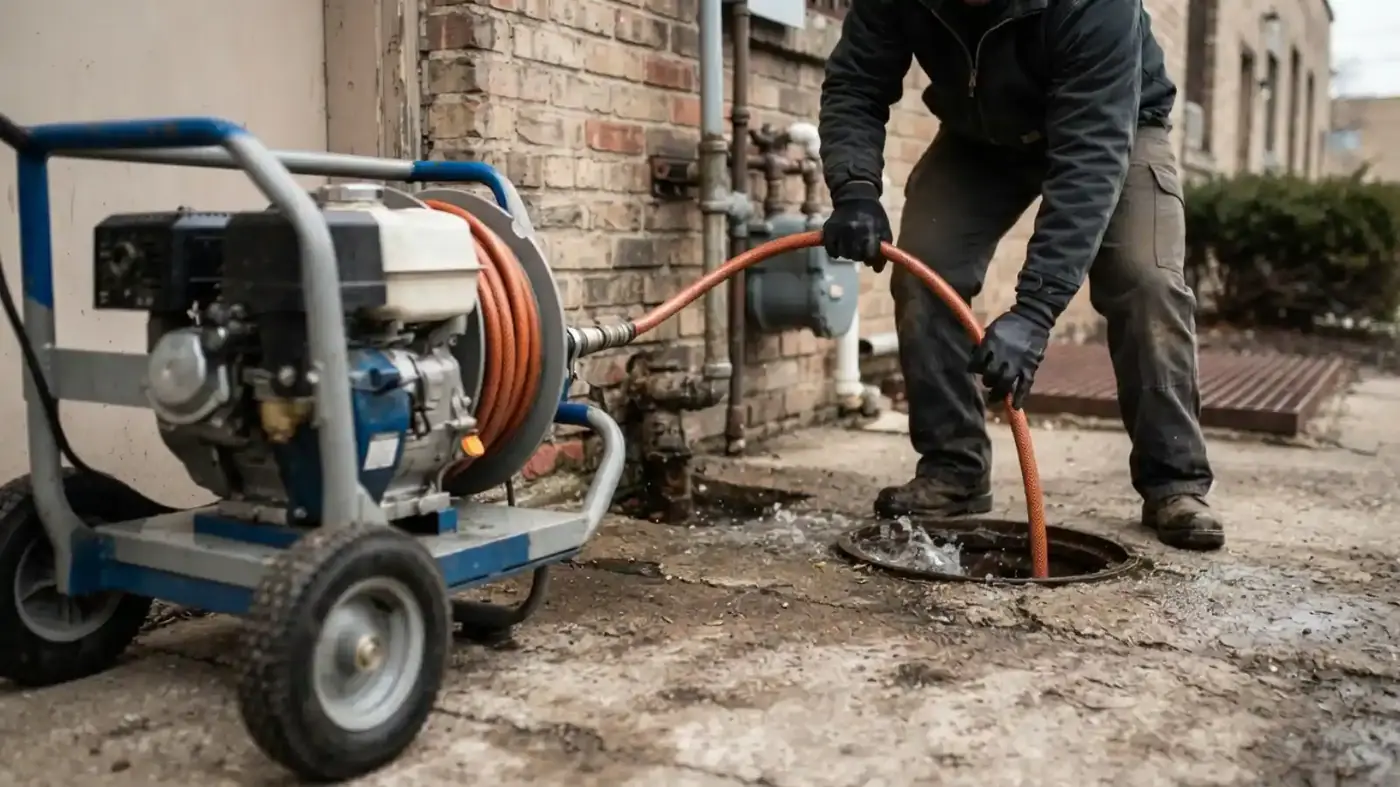
Emergency hydro jetting in Stoneham, MA is the fix we reach for when a drain or sewer line clogs again after a cable visit, or when a cable gets stuck partway down the pipe. A jetter sends water at high pressure through a hose and a nozzle, and the spinning jets scour the pipe wall instead of poking a hole through the middle.
The result is a line that flows at close to its original diameter. This page covers when jetting is the right choice, when it is not, and how it fits with drain cleaning and sewer line cleaning.
Sewer backup: what to do first
A main line that will not drain is an urgent problem because the water has nowhere to go. Jetting is available around the clock when the line is the cause, and a dispatcher can tell you whether the first visit should be a cable, a jetter or a camera.
While you wait, take these steps. They limit damage and help the plumber start faster.
- Stop using water everywhere, including the washing machine and the dishwasher.
- Move rugs and stored boxes away from the basement floor drain.
- Find the main cleanout, usually a capped pipe in the basement or near the foundation, and clear a path to it.
- Do not pour anything into the drain. Jetting works best when the line is not full of a chemical mix.
- Call the 24/7 line and mention if the problem is new or has happened before.
Dealing with hydro jetting in Stoneham? A real dispatcher answers, day or night.
Call (339) 216-9771When jetting beats a cable
A cable machine opens a channel and moves on. If the pipe wall is lined with grease or mineral scale, water finds the channel for a while and then the lining closes it again. Jetting removes the lining itself, which is why restaurants and older homes with repeat clogs benefit most.
Roots are a second case. A jetting nozzle with a rotating cutting head can clear small root hairs at joints, though large roots that have broken a pipe call for a repair rather than another cleaning.
| Situation | Cable machine | Hydro jetting |
|---|---|---|
| Single hair or paper clog | Usually enough | More than needed |
| Grease-lined kitchen or main line | Opens a channel, may return | Cleans the pipe wall |
| Cable stuck at the same distance | Cannot pass | Often clears it, camera first |
| Cracked or collapsed pipe | Can make it worse | Do not jet, repair instead |
The camera comes first when the line is unknown
Jetting a pipe that is broken can wash soil into the line or push water out of a crack and into the ground under a slab or foundation. For that reason a plumber should look at an older or unknown line with a sewer camera before turning on a jetter.
Once the picture shows a sound pipe with buildup, the jet nozzle is sized to the line, usually 3 to 4 inches for a house drain, and run from the cleanout toward the street. A second camera pass after the jetting confirms the wall is clean.
What jetting cannot do
Jetting is not a repair. A pipe with a belly, where a section sags and holds water, will keep collecting waste after it is cleaned. An offset joint or a break needs a sewer line repair to fix the line itself.
We say so after the camera pass, with the video, rather than recommending a second cleaning that will not hold.
Stoneham properties that benefit most
Homes from the mid-century and earlier, with older drain materials, are the usual candidates for jetting after a camera inspection. So are two-family houses that share a line, and small commercial buildings near Stoneham Center and Route 28, where kitchen and bathroom use is heavy.
If you manage a restaurant or a multi-unit building, ask about a scheduled jetting visit on a regular interval. A planned visit costs less than an emergency call on a Saturday night, and it protects tenants from a backup.
What the visit looks like
- The plumber finds the cleanout and runs a camera to see what is in the pipe.
- The jet hose is fed in from the cleanout, with a nozzle matched to the pipe size and material.
- Water pressure is raised in steps while the hose is pulled back, so the pipe wall is cleaned all the way.
- A final camera pass confirms the line is clear, and you get the video for your records.
What affects the price of hydro jetting
Line length and size
A short 3-inch line takes less time than a long 4-inch lateral running to the street.
Condition of the pipe
A sound pipe jets quickly. A pipe with heavy buildup or roots needs multiple passes.
Camera work
A camera inspection before and after adds time, and gives you proof of the result.
Access
A clear cleanout is faster than a line that needs a fixture pulled or an access fitting added.
Urgency
Emergency visits are available 24/7, and a planned visit can be scheduled for a lower-demand time.
Jetting for maintenance is usually not covered by homeowner insurance. If a backup has already damaged finished space, call your insurer before cleanup starts and keep your photos.
Plumbing in Massachusetts is regulated under 248 CMR, and a licensed plumber should handle any sewer work that goes beyond cleaning.
Want your real number? Call (339) 216-9771 and describe the problem. You get a clear price before work starts.
Frequently asked questions
Yes. Our line is open 24/7. If your main line is backing up, a dispatcher can schedule jetting or a cable visit as the first step and tell you what to do until the plumber arrives.
On a sound pipe at a correct pressure, no. On a cracked or collapsed pipe it can do harm, which is why we run a camera first when the line is old or unknown.
Most homes never need a scheduled jetting. Restaurants and buildings with heavy grease flow often benefit from a routine visit, and a plumber can suggest an interval after seeing the first camera video.
For a single hair clog, a cable is quicker and costs less. For grease, scale and repeat clogs, jetting cleans more of the pipe and lasts longer.
No. The water stays inside the pipe and leaves through the sewer line. We set up at a cleanout so the hose goes straight into the line.
Ready to talk through your hydro jetting problem? Call the 24/7 line.
Call (339) 216-9771