Emergency sewer line cleaning in Stoneham, MA is for the clog that sits in the main drain, the large pipe that carries everything out of the house. When it blocks, every fixture suffers, and the lowest drain in the house, often the basement floor drain, shows it first.
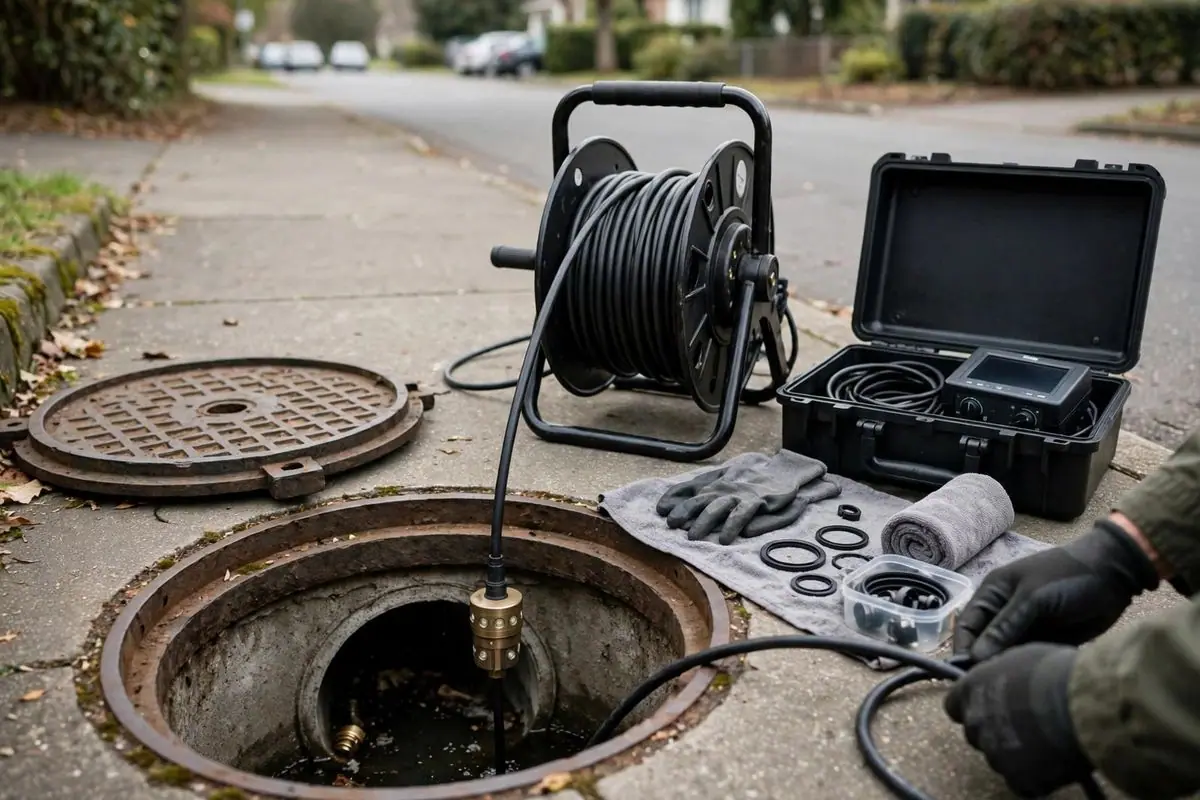
We clear the main with a large cable machine or a jetter, check the line with a camera, and tell you what the video showed. If a repair is needed, we say so plainly. This page explains the process and how it differs from drain cleaning on a single fixture.
Main line backed up: what to do first
When the main is blocked, wastewater has no exit. Our 24/7 line takes these calls at any hour, and you can ask about timing when you call.
Take these steps while the plumber is on the way.
- Stop water use in the whole house, and stop the washing machine mid-cycle if you can.
- Do not flush the toilet, even if it seems to drain, because the water has to go somewhere.
- Clear boxes and rugs from the basement floor and keep children away from the drain.
- Locate the main cleanout, usually a threaded cap on a pipe near the foundation or in the basement.
- Call the 24/7 line and tell the dispatcher which fixtures are affected.
Dealing with sewer line cleaning in Stoneham? A real dispatcher answers, day or night.
Call (339) 216-9771Signs the clog is in the main line
Any one of these can come from a small clog, but two or more together point to the main. If the symptoms follow a long dry stretch followed by heavy rain, ask whether groundwater is entering a cracked pipe.
- Two or more fixtures drain slowly or back up at the same time.
- The basement floor drain bubbles when you run the washer or flush a toilet.
- A toilet bowl rises when a shower is running upstairs.
- Gurgling sounds come from a drain that was not in use.
- A sewage smell near the cleanout or in the basement.
Large cable or jetter: which tool for the main
A main line cable machine runs a thick, spinning cable through 3 or 4 inch pipe with a cutting head to open the blockage. It is the usual first move for a paper, hair or root clog. If the pipe wall is coated with grease, hydro jetting cleans more of the surface.
After the line is open, the plumber runs a camera to confirm there is no break, offset or heavy root intrusion. We want to know why it clogged, not just that it did.
Sewage in the house: safety and cleanup
Sewage carries bacteria, so a backup should be treated as a health matter. Keep children and pets out, and wear gloves and boots if you must go in the room. Hard surfaces can be washed with a disinfectant after the line is clear. Carpet, drywall and insulation that got wet with sewage usually need professional removal.
Your insurer may ask for photos and a plumber's report, and we can provide the camera video and a written summary of the cause.
Stoneham homes, rainy seasons and sewer flow
Stoneham's Public Works department operates about 75 miles of sewer line and five sewer pumping stations, and its page on water and sewer service says it works to reduce stormwater and groundwater getting into the sewer. That matters for homeowners because a heavy storm can raise flow in the system, and a partially blocked lateral shows its weakness first.
A line that backs up only during or after heavy rain deserves a camera look at the joints. It may be taking in groundwater through a crack. A line that backs up in dry weather is usually blocked by roots or grease.
When to schedule maintenance cleaning
Homes with a history of root problems, older cast iron or clay laterals, or a restaurant or rental property with heavy use are the ones that benefit from a planned cleaning every year or two. A planned visit is calmer than a Saturday night backup, and the plumber has time to check the line with a camera.
If your main has never been cleaned, ask for a camera inspection first. It will show whether the line is a good candidate for a maintenance schedule or needs a repair, as covered on our sewer line repair page.
What affects the price of sewer line cleaning
Cleanout access
A cleanout makes the job straightforward. If none exists, one may be recommended so future visits are quicker.
Line length and diameter
A longer run to the street takes more time and cable.
What is blocking it
Paper and grease clear quickly. Roots and compacted debris need more passes and cutting heads.
Tool used
A cable, a jetter and a camera each have different time and equipment needs.
Time of day
Emergency dispatch is available 24/7, and the price is provided before work starts.
A cleaning is usually a maintenance expense rather than an insured loss. If sewage damaged your finished space, your policy may include sewer backup coverage, so call your insurer before cleanup begins.
The state plumbing code, 248 CMR 10.00, sets how cleanouts and building drains are installed, which is why we may recommend adding one.
Want your real number? Call (339) 216-9771 and describe the problem. You get a clear price before work starts.
Frequently asked questions
Yes. The line is open 24/7. A dispatcher will tell you what to shut off and will schedule the earliest visit with a cable machine or a jetter.
Most main-line cleanings take one to two hours, plus time for a camera pass. A line with heavy roots can take longer.
If the cause was a one-time object, no. If it was roots or grease, it can return, and the camera will show how soon. We will tell you honestly if a repair is the better path.
Look in the basement near the foundation wall facing the street, or outside near the house, for a capped pipe a few inches wide. If you cannot find it, the plumber will.
A homeowner can rent a cable machine, but a large cable in a main line can get stuck or damage a weak pipe. A camera visit is safer when a line is old or unknown.
Ready to talk through your sewer line cleaning problem? Call the 24/7 line.
Call (339) 216-9771