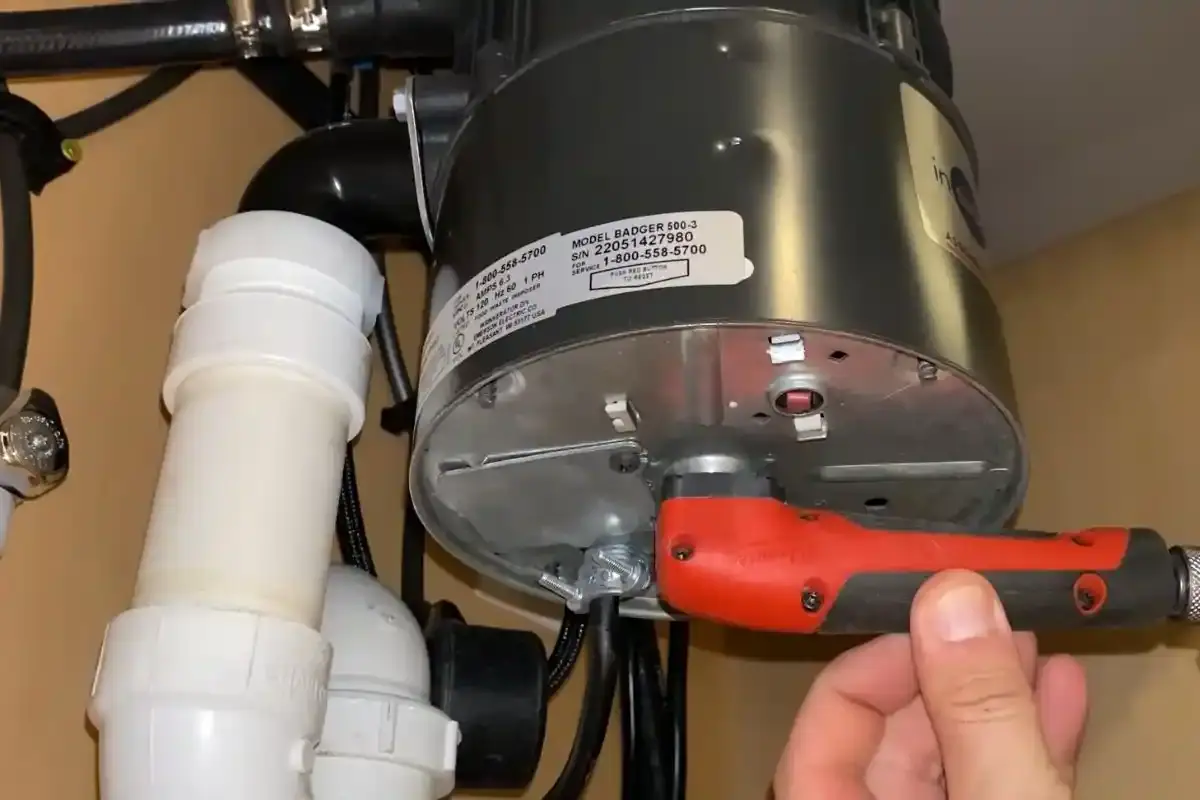
Replacing a garbage disposal with a similar model is one of the more approachable plumbing jobs, because the sink flange, the mounting ring and the drain connections follow a standard layout. A first install in a house with no existing disposal is a bigger project, since it adds electrical and drain work.
This guide covers the steps of a swap, the electrical requirements, the mistakes that cause leaks and when to bring in a plumber. For a failing unit that you want diagnosed first, see garbage disposal repair.
What you need before you start
Take photos of the old installation before you remove anything. They show how the parts fit and where the dishwasher hose connects.
- A new disposal of the same type, with a mounting kit if it is not included.
- A power cord or a hardwire kit, depending on how the old unit is wired.
- Plumber's putty, a screwdriver set, pliers, a hex key and a bucket.
- A dishwasher drain hose connection, with the knockout plug removed if the dishwasher drains through the disposal.
- A switch that controls the disposal, and a way to cut power at the panel.
Want a plumber to look at your diy disposal installation problem? A real dispatcher answers 24/7.
Call (339) 216-9771Swapping an existing unit
Hand-tighten the connections, and then snug them with a tool. Over-tightening can crack a plastic fitting.
- Turn off power at the breaker and unplug the unit or disconnect the wires.
- Disconnect the drain pipe, the dishwasher hose and the trap.
- Twist the old unit off its mounting ring, using the tabs or a screwdriver in the lug.
- Remove the mounting ring and the flange, and clean the sink opening of old putty.
- Seat the new flange with fresh putty, attach the mounting ring and snap the new unit on.
- Reconnect the drain, the dishwasher hose and the power, then run water and check for leaks.
The dishwasher knockout, a common mistake
Many new disposals have a plastic plug in the dishwasher inlet that must be knocked out if the dishwasher drains through the disposal. Forgetting it blocks the dishwasher, and the water backs up into the dishwasher. If the plug is already out and you have no dishwasher connection, the inlet needs to be capped.
Another common mistake is a loose flange seal, which leaks from the top of the sink. A fresh ring of putty and an even tightening of the mounting bolts avoids it.
Electrical: outlet, switch and safety
A disposal needs a switched circuit, commonly a receptacle under the sink on a wall switch, or a hardwired connection. If there is no switch and no outlet, adding them is electrical work, which should be done by a licensed electrician.
A disposal on a circuit with a ground fault interrupter, or GFCI, may trip more often, so a dedicated circuit is better. Never work on the unit with power on, and do not rely on a wall switch alone for safety.
| Situation | DIY? | Why |
|---|---|---|
| Swap with same mount and plug-in cord | Often yes | Same connections |
| Swap with a different mount | Maybe | Needs new flange and fitting |
| First-time disposal, no outlet or switch | No, hire an electrician | New wiring |
| First-time disposal, drain changes | Plumber recommended | Trap and venting changes |
| Leaks after install | Call a plumber | May be a defect or a drain issue |
When to call a licensed plumber
If the sink drain needs reworking, if the existing trap is corroded or if you see a gap in the venting, a plumber is the better choice. Massachusetts requires licensed professionals for plumbing work and, in most cases, a permit.
A disposal leaks into a cabinet if anything is off, and the damage can run unseen. We install the unit, test for leaks and check the drain line. If the sink also drains slowly, a drain cleaning visit is a good companion.
Testing the install and living with it
After the new unit is mounted, fill the sink with a few inches of water and release it to check the flange and the drain connections. Run the disposal with cold water flowing, and watch under the sink with a flashlight for any drip. Run the dishwasher and check its hose connection too.
Check again after a day, since a slow seep from a loose connection can take hours to show. Keep the instruction booklet and the warranty card, and note the date. A unit that hums but does not spin, trips repeatedly or leaks from the body in the first months is a warranty question, so contact the manufacturer before you try to repair it.
Disposals and Stoneham's sewer
Stoneham's Public Works department operates the town's sewer system and handles sewer plug complaints. A disposal sends food scraps and grease into the drain, and a home with an older lateral is more likely to clog. Grease is the usual culprit, so scrape pans into the trash and run cold water while grinding.
Ask the Stoneham Building Division whether a plumbing or electrical permit applies to your install. For homes in nearby Wakefield or Winchester, check with your own building office.
Want a local plumber to check your diy disposal installation? Call now.
Call (339) 216-9771Frequently asked questions
A homeowner can often swap a like-for-like unit, but plumbing and electrical rules apply, and permits may be required. A licensed plumber is the safe choice for new installs.
One-third to one-half horsepower is common for light use. A larger motor handles more and runs quieter.
The flange seal is likely not seated. Remove the unit, reseat the flange on fresh putty and tighten evenly.
The knockout plug in the disposal inlet was probably not removed.
A normal wall switch can control a disposal wired to an outlet. A professional can advise on a dedicated circuit.
Questions about diy disposal installation in your own house? Call and describe what you see.
Call (339) 216-9771