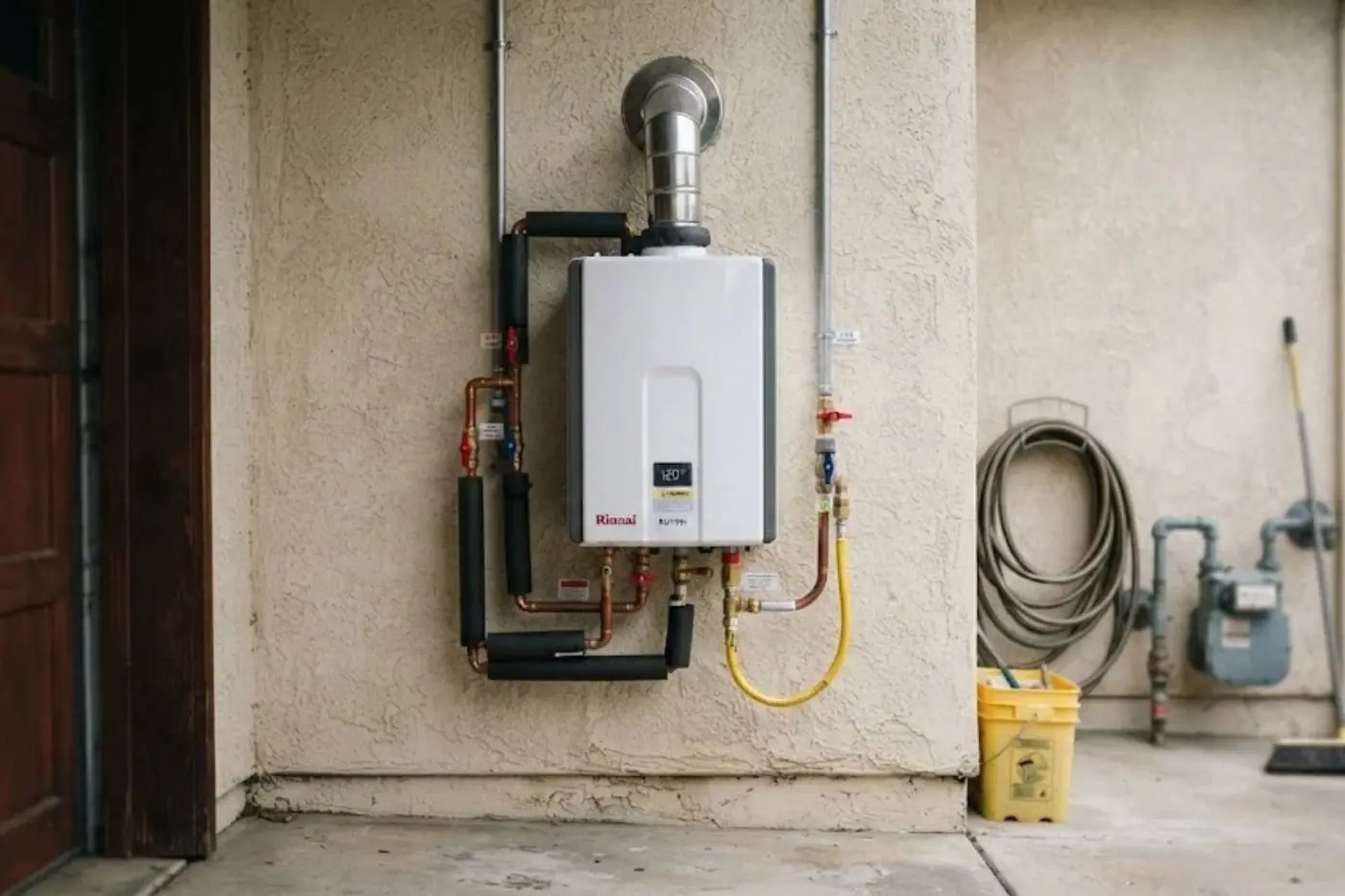
The NPE-240A2 is a model number for a condensing, gas-fired tankless water heater sold by Navien. People search the number because it appears on a quote, a spec sheet or a rebate form. A model number tells you what the unit can do, but not whether your house can support it, and that second question is where projects succeed or stall.
This guide explains what a high-capacity gas condensing unit needs from a home, what to check before you commit, and how installation works. Check the manufacturer's current specification sheet for exact ratings, since models are updated. For general background, see our tankless water heater page.
What the model number tells you
Model numbers encode the family, the capacity and the generation. In this case the unit is in a line of condensing gas tankless heaters that can serve a large household, with the larger models rated for several fixtures running at once. The word condensing means the exhaust is cool enough to be vented in plastic pipe, and it produces acidic condensation that must drain away.
- Fuel: natural gas or propane, depending on the version.
- Venting: sealed plastic vent and combustion air, usually through a side wall.
- Condensate: a drain line, often with a neutralizer.
- Power: a standard outlet for the fan and controls.
- Capacity: expressed in gallons per minute at a given temperature rise.
Want a plumber to look at your npe-240a2 tankless heater problem? A real dispatcher answers 24/7.
Call (339) 216-9771Sizing: flow rate and the winter temperature rise
A tankless heater is sized by the flow it must deliver at the temperature rise you need. In winter the incoming water is cold, so the heater has to add more heat to reach the same shower temperature. The same unit that delivers 6 gallons a minute in summer delivers less in January.
| Use | Typical flow | Notes |
|---|---|---|
| Shower | 2 to 2.5 gallons per minute | Low-flow heads use less |
| Kitchen sink | 1 to 1.5 gallons per minute | Often short draws |
| Dishwasher | 1 to 1.5 gallons per minute | Runs for a while |
| Washing machine | 1.5 to 2 gallons per minute | Hot cycles only |
| Large soaker tub | 4 to 6 gallons per minute | A major load, check the unit's rating |
The gas line is often the deciding factor
A high-capacity tankless burns much more gas per hour than a tank heater, and the pipe that served the old tank may be too small. The plumber checks the pipe diameter and length, and the gas meter capacity. If the pipe is undersized, a larger line has to be run, which adds cost and may need a permit.
Gas work must be done by a licensed gas fitter under a permit, and in Stoneham the Building Division handles gas permits and inspections. Ask it what the project needs.
Venting, condensate and where it goes on the wall
The vent runs through an exterior wall to a termination that meets clearance rules for windows, doors and other openings. The location of the unit is usually set by the shortest path to a legal vent point. The condensate drain needs a nearby floor drain, a laundry standpipe or a small pump.
Plan the location before buying the unit. A heater that needs a long vent run or a condensate pump costs more to install than one near an exterior wall and a floor drain.
Installation day and ongoing care
Plan a yearly flush and an inlet filter clean. Our water heater installation page explains what a planned install includes, and water heater repair covers service of a unit you already have.
- The plumber shuts off water and gas and removes the old tank.
- The new unit is mounted on the wall, with isolation valves for flushing.
- Gas, water, vent, combustion air and condensate lines are connected.
- The system is purged, started and tested for combustion, leaks and temperature.
- You get a walkthrough of the controls and the flush procedure.
Questions to ask before you buy
A written answer to each question, from the person who will install it, is the best protection against a surprise on installation day. If a quote answers none of them, ask for a site visit before you commit.
- What is the unit's rated flow at my winter incoming water temperature?
- Does my gas meter and gas line have the capacity for the unit's maximum input?
- Where will the vent terminate, and does it meet clearance rules?
- Where does the condensate drain, and does it need a neutralizer or a pump?
- Does the unit need a recirculation setup to avoid long waits at far fixtures?
- What does the warranty require for installation and maintenance?
Tankless in a Stoneham home: water and permits
Stoneham's water comes from the MWRA system and is described as soft, at about 1 grain per gallon. Scale builds more slowly in soft water, so a tankless heater here needs descaling less aggressively than in hard-water areas, though a yearly flush is still the standard advice.
For gas and plumbing permits, ask the Stoneham Building Division. Homeowners in nearby Woburn and Winchester should check with their own building offices.
Want a local plumber to check your npe-240a2 tankless heater? Call now.
Call (339) 216-9771Frequently asked questions
It is in the high-capacity class, which suits larger households, but the right unit depends on your flow needs and the gas line. Check the current spec sheet and size for winter conditions.
Often a larger line is needed, because the unit draws a lot of gas. A plumber checks the pipe size and the meter.
Yes. A condensing unit makes acidic condensation that must drain away, often through a neutralizer.
Gas and plumbing work requires licensed professionals and a permit in Massachusetts. A professional install also protects the warranty.
Programs change. Ask your utility or Mass Save before you buy, since eligibility can depend on the model.
Questions about npe-240a2 tankless heater in your own house? Call and describe what you see.
Call (339) 216-9771