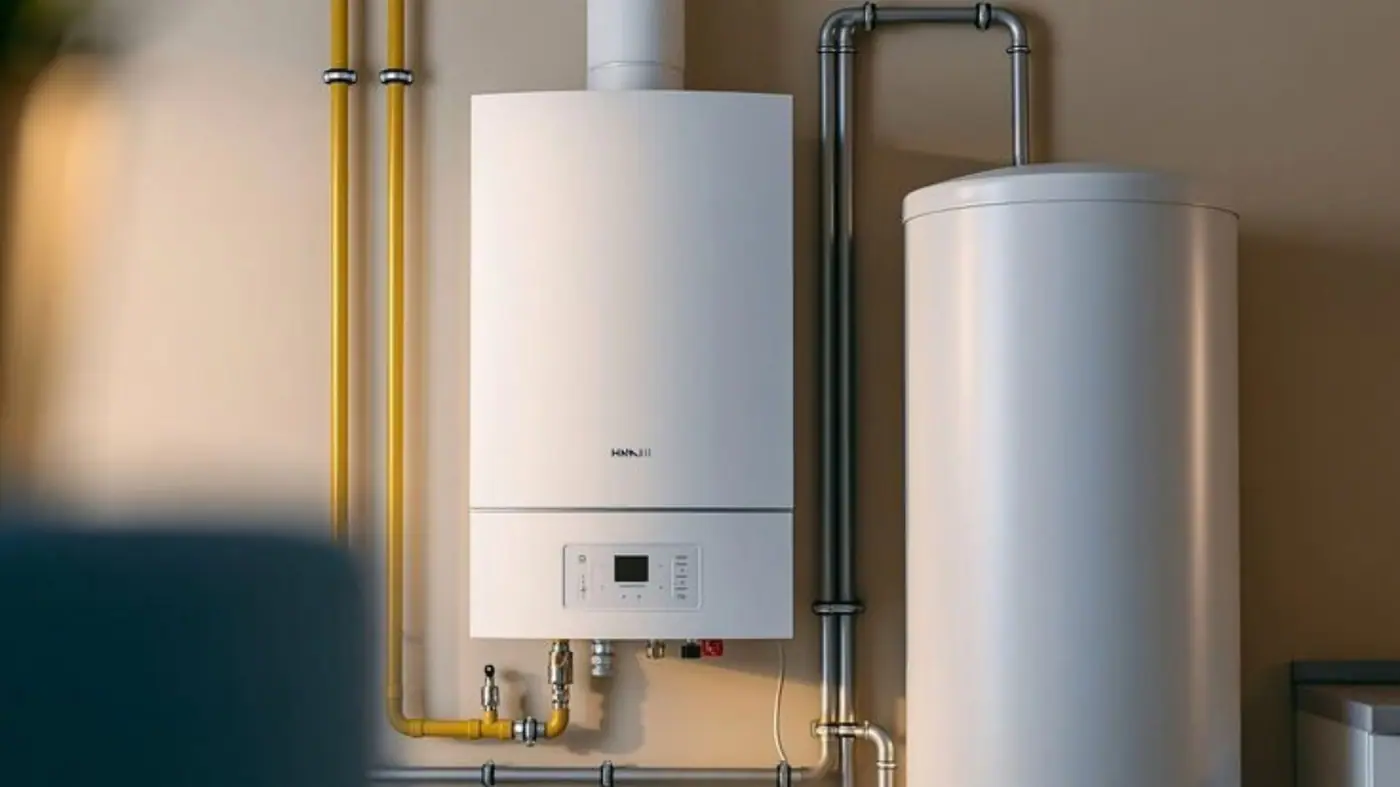
Homeowners who heat with oil often search for an oil tankless water heater, and the phrase can mean two different systems. One is a tankless coil inside the boiler, which heats domestic water on demand. The other is a standalone oil-fired water heater, which is rare in modern houses. Knowing which you have decides what repair or upgrade makes sense.
This guide explains how each works, where they fall short and what the alternatives are. Oil burner service uses a separate license from plumbing, and we say plainly which parts we handle. If you have no hot water, see water heater repair.
Tankless coil: hot water from the boiler
A tankless coil is a bundle of copper tubing inside an oil-fired boiler. When you open a hot tap, cold water flows through the coil and is heated by the boiler water around it. There is no storage tank, so the hot water is available as long as the boiler is hot.
To keep hot water ready, the boiler must stay warm, which means it fires throughout the year, even in summer. That standby cost is the main weakness of the system.
| System | How it makes hot water | Main drawback |
|---|---|---|
| Tankless coil in oil boiler | Coil inside the boiler heats water on demand | Boiler cycles all year, wasted fuel |
| Indirect water heater tank | Boiler heats a separate insulated tank by a loop | Needs space for the tank |
| Standalone oil-fired tank | Oil burner heats a storage tank directly | Rare, needs a chimney, high fuel cost |
| Electric or heat pump tank | Electricity heats a storage tank | Operating cost depends on rates |
Want a plumber to look at your oil tankless water heater problem? A real dispatcher answers 24/7.
Call (339) 216-9771Common problems with a coil system
Some of these are repairs, such as a failed mixing valve or a flush of the coil. Others, such as a leaking coil, may point toward replacing the system.
- Lukewarm water in summer when the boiler is not firing often.
- Flow that drops over the years as scale and sediment build in the coil.
- Temperature swings when the boiler cycles.
- A leak from the coil into the boiler water, which shows as constant pressure drops.
- Long waits for hot water at the far taps.
An indirect tank as the upgrade path
Many homeowners upgrade from a tankless coil to an indirect water heater, which is a well-insulated tank heated by the boiler through a loop of water. The boiler fires only when the tank needs heat, and the tank holds hot water ready for peak demand. It can lower the standby loss compared with a coil.
The plumbing side of an indirect tank, which includes the tank, the loop piping, the circulator and the water connections, is work we can do. The oil burner and its controls are a separate license, so a heating technician may be needed for that part.
Who does what in Massachusetts
Massachusetts divides plumbing, gas fitting and oil burner work by license. A plumber handles the water piping, tanks and valves. An oil burner technician handles the burner, the controls and the fuel side. A project that swaps the water heating method often needs both.
When you call, tell the dispatcher what you have: a boiler with a coil, a separate tank, the age and the symptoms. We tell you what we can do and when to bring in a burner technician. See boiler repair for the water-side work we handle.
Switching away from oil water heating
Some homeowners decide to replace the system altogether. Options include a heat pump water heater, a gas tank or tankless unit where gas is available, or an indirect tank on the existing boiler. Each has different costs, space needs and operating bills.
A conversation about the whole house, including the boiler's age, is worth having before you pick. A new water heater on a very old boiler may not be the best use of money, and a heating professional can advise on the boiler itself.
Costs and what to expect
The cost of keeping a tankless coil running is mostly fuel. A boiler that fires year-round to keep the coil hot uses oil even when no one is showering. An indirect tank cuts that standby loss, but it adds the price of the tank, the piping and the labor.
A practical way to decide is to look at the age and condition of the boiler.
If the boiler is in good shape, an indirect tank is a sound upgrade. If the boiler is near the end of its life, replacing the whole system may cost about the same as replacing one part and leave you with a more efficient setup. We can lay out the plumbing side of either path, and a heating technician can advise on the burner and the boiler.
Oil, permits and Stoneham
Public housing data put the typical Stoneham home at around the late 1950s, and many New England homes of that era were heated with oil. Some have since converted to gas and some still burn oil. If you are not sure what you have, look for a fill pipe outside and a tank in the basement.
Permits for plumbing and fuel work go through the Stoneham Building Division, so ask it what a water heater change needs. In nearby Melrose and Reading, check with the local building office.
Want a local plumber to check your oil tankless water heater? Call now.
Call (339) 216-9771Frequently asked questions
No. A tankless coil sits inside the boiler and uses boiler heat. A standalone tankless heater is a separate gas or electric unit.
In many coil systems, the boiler is fired less in summer, and the coil has less heat to give. An indirect tank or a standalone heater avoids that.
Oil burner service needs a separate license. We handle the plumbing side and will tell you when a burner technician is needed.
It is a storage tank heated by the boiler through a loop, which makes hot water without a coil in the boiler.
If both are old, it is worth discussing. A heating professional can advise on the boiler, and we can handle the water side.
Questions about oil tankless water heater in your own house? Call and describe what you see.
Call (339) 216-9771