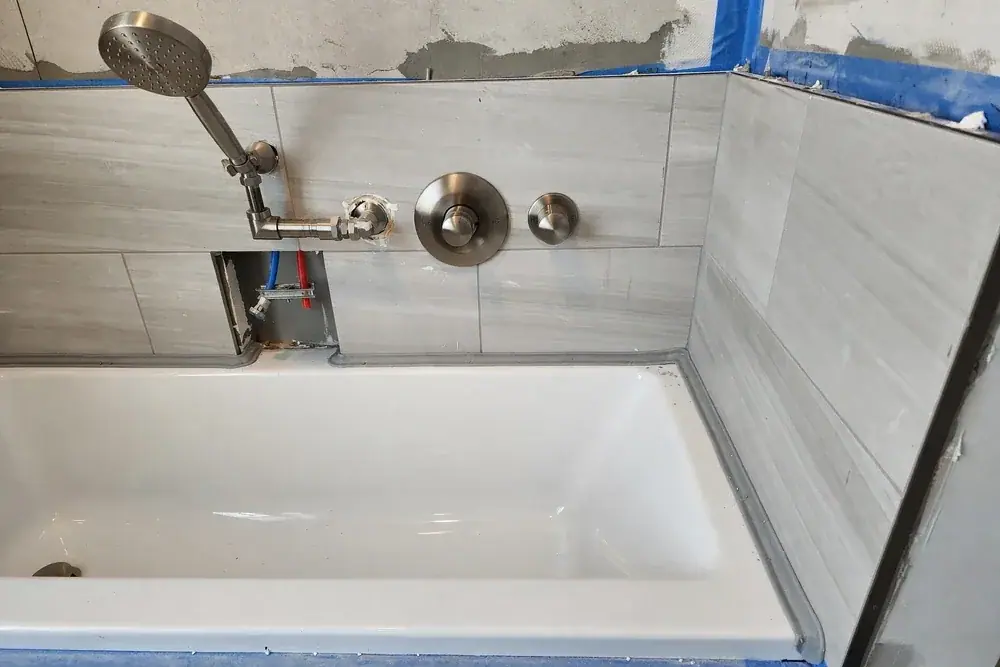
A large rain shower head looks like a fixture swap, but the plumbing behind the wall decides how it performs. The height of the arm, the size of the supply pipe, the type of valve and the water pressure all shape the result. A head that is too large for the pipe produces a weak drizzle.
This guide walks through what a rain shower needs, how it connects to the valve, and where a licensed plumber is needed. If you are remodeling, see plumbing installation for how a rough-in is planned.
Overhead supply: where the pipe goes
A rain shower head mounts either on a ceiling-mounted pipe or on a long arm that extends from the wall. A wall-mounted arm uses a standard shower elbow set at a height that allows the head to hang above the user. A ceiling mount needs a supply pipe run above the ceiling or through the wall and up.
The rough-in height is set before the tile goes on, and the elbow must be backed by solid blocking so it does not move. Changing the height after the wall is finished is a repair, not a swap.
| Mount type | Supply route | Best for |
|---|---|---|
| Wall arm, standard height | Existing shower pipe | Simple swap, modest size |
| Wall arm, raised | New elbow higher in the wall | Taller users, larger heads |
| Ceiling mount | New pipe above or through the wall | True overhead look |
| Dual head with handheld | Diverter valve and two outlets | Flexible use |
Want a plumber to look at your plumb a rain shower head problem? A real dispatcher answers 24/7.
Call (339) 216-9771Pressure and flow limits
A shower head uses a limited number of gallons per minute, and federal rules cap new shower heads at 2.5 gallons per minute at standard pressure. A rain head spreads that flow over a large face, so it feels gentler. Some wide heads reduce the flow rate even further to keep the feel.
If you want several body sprays plus a rain head, the combined flow can exceed what the supply can deliver. A plumber checks the pipe size and the pressure and tells you what is realistic.
Valve and diverter choices
The valve controls temperature and flow, and a pressure-balanced or thermostatic valve protects against sudden changes when someone flushes a toilet. If you want to run a rain head and a handheld, you need a diverter or a multi-outlet valve.
The valve is set into the wall at rough-in, and its trim kit is chosen to match the model. Buy the valve and trim from the same brand, and bring the specifications to the plumber before the walls close.
Waterproofing and drainage
A larger spray area puts more water on the walls and the floor, so the waterproofing is more important than with a standard head.
- The shower pan or base must slope toward the drain.
- The walls need a waterproof membrane behind the tile.
- A ceiling-mounted head sprays upward at the ceiling, so use moisture-resistant materials.
- The fan should be rated for the bathroom size.
- Test the drain flow before tiling.
DIY or a licensed plumber
Swapping a head on an existing arm is a homeowner task. Moving the arm, cutting a new supply line, replacing a valve or adding a diverter is plumbing work. In Massachusetts, plumbing work requires licensed professionals and often a permit.
If you are adding a bathroom or moving fixtures, a plan with a plumber before demolition saves a lot of rework. Our repiping page is also relevant if the supply pipes in the wall are old and need replacing while the wall is open.
Checklist before the wall closes
Photographs of the open wall are one of the most useful records you can keep. Years later, they tell the next plumber where the supply lines, the valve and the drain run, and they save a lot of exploratory cutting.
- Confirm the head's rough-in dimensions and the arm length from the spec sheet.
- Set the elbow height and secure it to solid blocking.
- Choose the valve and trim kit from the same manufacturer.
- Pressure-test the new lines before drywall goes up.
- Photograph the pipe layout inside the wall so you know where it runs later.
- Check that the shower pan, curb and waterproofing are complete before tile.
Permits and water in Stoneham
Plumbing work in Massachusetts is regulated under 248 CMR, and the Stoneham Building Division issues permits and inspects the work. Ask it what applies to a shower rough-in or a valve replacement before you start.
Stoneham's water is soft, at about 1 grain per gallon according to MWRA, so showerheads need less descaling than in hard water areas. If you live in nearby Reading or Melrose, check your local water report and building office.
Want a local plumber to check your plumb a rain shower head? Call now.
Call (339) 216-9771Frequently asked questions
Many people set the arm at around 80 to 84 inches from the floor, but the right height depends on the users and the ceiling. Decide before the wall is closed.
It can feel gentler because the flow is spread over a large face. Check the pipe size and the head's flow rate for the result you want.
If it fits the existing arm and the pipe is in good condition, yes. Larger heads and ceiling mounts need new piping.
In most cases yes. Ask the Stoneham Building Division, and we can take care of the permit for the work we do.
Buy the valve before the rough-in. The head can come later, but its connection must match the supply you install.
Questions about plumb a rain shower head in your own house? Call and describe what you see.
Call (339) 216-9771