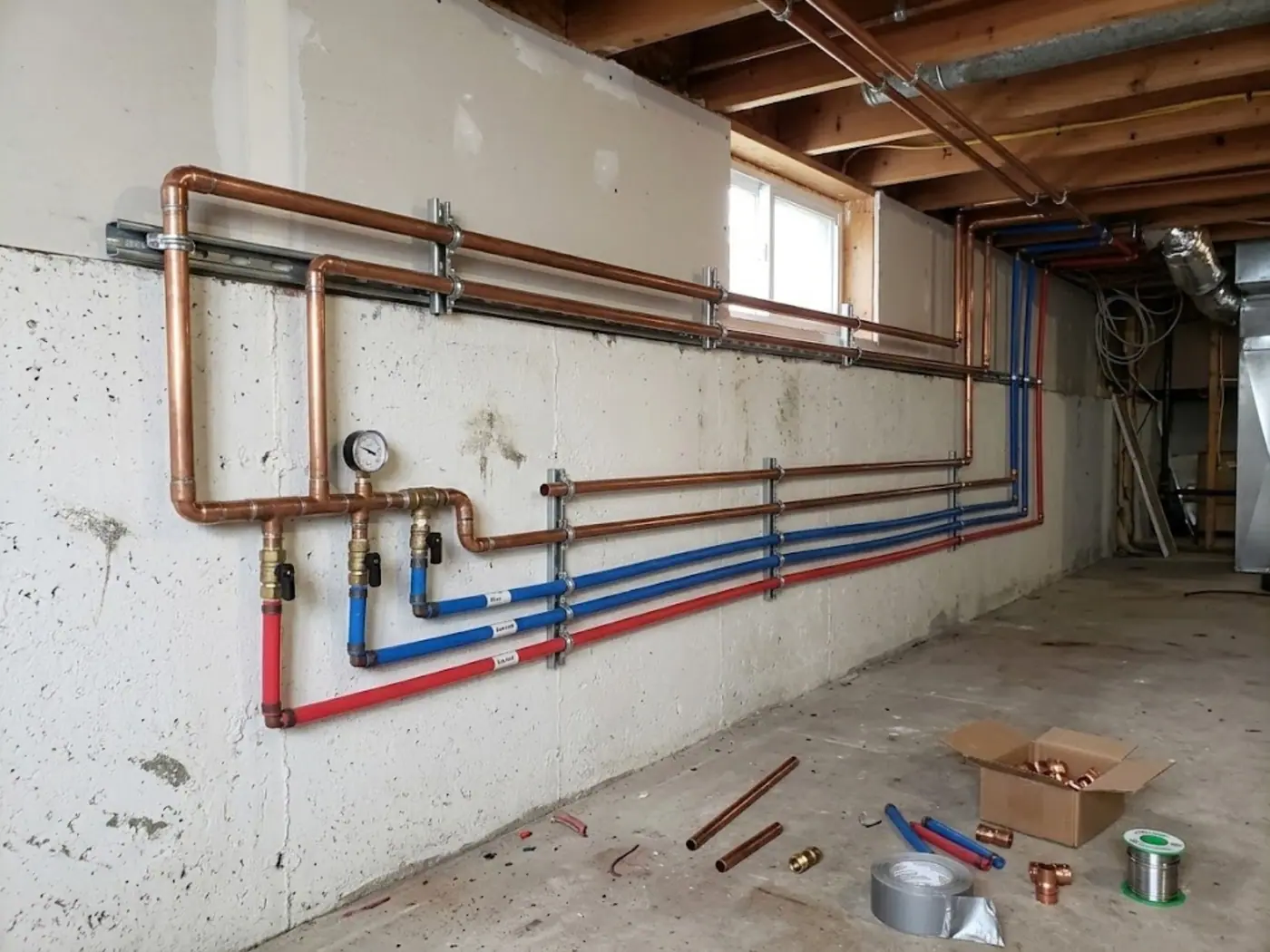
A whole-house repipe is one of the bigger plumbing projects a homeowner faces, and it often arrives as a surprise, after a second or third leak. Paying for it is a separate question from deciding whether to do it, and the right answer depends on your finances and your timeline.
This guide describes the common ways people pay, the questions to ask and the points where a plumber's scope can lower the cost. We are a plumbing company, not a lender or a financial advisor, and we do not advertise a financing program on this site. For what the work involves, see our repiping page.
First, size the project properly
Financing a project that is bigger than it needs to be is an expensive mistake. Before borrowing, get a written scope that says which pipes are failing and which are sound. A partial repipe of the worst runs can cost far less than a whole-house replacement and can solve the actual problem.
A plumber should look at the pipe type, the pattern of leaks and what is behind the walls. If you have received one quote for a full repipe, a second opinion with a clear scope is worth the time.
| Scope | Typical use | Cost level |
|---|---|---|
| Spot repair | One leak, sound pipes around it | Lowest |
| Partial repipe | One floor or one wing with failing pipe | Moderate |
| Whole-house repipe | Pipe type with known problems, many leaks | Highest |
| Repipe during a remodel | Walls already open | Lower labor cost for access |
Want a plumber to look at your repipe financing options problem? A real dispatcher answers 24/7.
Call (339) 216-9771Common ways to pay
Homeowners generally choose among a few routes, each with different costs and risks. None is right for everyone.
Compare the total cost of each option, not just the monthly payment. A longer term lowers the payment and raises the total interest.
| Option | How it works | Watch for |
|---|---|---|
| Savings | Pay from cash on hand | Leaving enough for emergencies |
| Home equity loan or line of credit | Borrow against home value, often at a lower rate | Your home secures the loan, variable rates on lines |
| Personal loan | Unsecured loan with fixed payments | Higher rates than secured loans |
| Contractor payment plan | A payment plan offered by a contractor or a third party | Fees, rates and terms vary, read the contract |
| Credit card | Charge the project | High interest if not paid off quickly |
Insurance and what it may cover
Homeowner insurance usually does not pay for repiping because of age or wear. It may pay for the sudden water damage from a burst pipe, and in some cases for tearing out a section to reach the leak. If a burst pipe is what started this, call your insurer before work begins and keep photos and the plumber's written report.
Do not assume coverage. Ask your agent what your policy says about pipe replacement, access costs and resulting damage.
Questions to ask before you borrow
A lender or a financial advisor can answer these better than a plumber. We can help by giving you a clear written scope and price.
- What is the total repayment, including fees and interest?
- Is there a penalty for paying early?
- Is the rate fixed or variable?
- Does the loan use my house as collateral?
- What happens if I miss a payment?
- Is there a cheaper partial repipe that solves the problem?
Ways the project plan can lower cost
Access is a large part of the cost. A house with an open basement and an accessible attic is cheaper to repipe than one with finished walls everywhere. Scheduling the repipe during a bathroom or kitchen remodel, when the walls are already open, avoids opening them twice.
Pipe choice matters too. PEX is typically less expensive than copper in both material and labor, while copper has a long track record. We explain the tradeoffs on a site visit, and we also cover burst pipe repair if the immediate issue is a failure that cannot wait.
Comparing quotes fairly
When you collect quotes for a repipe, ask each contractor to price the same scope, with the same pipe material, the same number of fixtures and the same wall repair. A low quote that leaves out drywall patching or permits is not lower once those are added.
Ask what is included for access holes, who patches and paints, how the permit and inspection are handled, and what the warranty covers. A written scope with line items makes the quotes comparable, and it protects you if a dispute arises. The cheapest quote is not always the best, and neither is the most expensive, so look for the one that explains what it is doing and why.
Permits and timing in Stoneham
A repipe in Massachusetts is licensed plumbing work under 248 CMR, and a permit is generally required. The Stoneham Building Division issues permits and schedules inspections, so the cost of the permit and the timing of inspections belong in your plan. Ask it what your project needs.
Public housing data put the typical Stoneham home at around the late 1950s, so many houses have piping that is decades old. If you are in nearby Woburn or Reading, check with your own town's building office.
Want a local plumber to check your repipe financing options? Call now.
Call (339) 216-9771Frequently asked questions
We do not advertise a financing program on this site. Ask the dispatcher what payment options are available for your project.
Usually not for age or wear. It may cover sudden damage from a burst pipe. Ask your agent.
It can be, if the failing runs are local and the rest of the pipe is sound. A plumber's inspection decides.
It depends on the pipe type and condition. Pipes with known problems, such as polybutylene, are often replaced before they fail.
Programs change and many target energy or lead issues, not general repiping. Check with your utility and the state before you borrow.
Questions about repipe financing options in your own house? Call and describe what you see.
Call (339) 216-9771