Ask ten people how often a sewer line should be cleaned and you will hear every answer from never to every year. The honest answer is that it depends. A modern plastic line with no trees nearby may never need it, and an older cast iron line under a large tree may need attention every year or two.
This guide gives a practical way to decide, by looking at the pipe, the history and the warning signs. For the service itself, see our sewer line cleaning page.
A rough schedule by situation
Those intervals are starting points. A camera look is the best way to turn a guess into a schedule.
| Situation | Suggested approach |
|---|---|
| Newer plastic line, no clogs, no big trees | Clean only when symptoms appear |
| Older cast iron or clay, no history of clogs | Camera look every few years, clean if buildup shows |
| Roots in the past | Annual or biennial cleaning, then repair or liner |
| Restaurant or heavy grease use | Scheduled jetting on a set interval |
| Rental or multi-unit property | Annual camera and cleaning check |
| Repeated clogs in a short time | Camera first, then repair, not repeated cleaning |
Want a plumber to look at your how often to clean a sewer line problem? A real dispatcher answers 24/7.
Call (339) 216-9771Signs to clean sooner
Any one of these deserves a call. Several together mean the main line needs attention soon.
- Slow drains on several fixtures.
- Gurgling when the washer or a toilet drains.
- Sewer smell near the basement floor drain.
- Water backing up in the lowest drain after laundry.
- A lush green patch over the sewer line in the yard.
What a cleaning actually does
A cable machine opens a channel and cuts roots. Hydro jetting washes the pipe wall with high-pressure water. Either method removes buildup, and neither repairs a break. If a camera shows damage, cleaning is a temporary measure and a repair is the lasting fix.
See our pages on hydro jetting and sewer inspection for how the tools differ.
Cleaning too often is a signal, not a plan
If you are cleaning the line every six months, the line is telling you something. A sag that holds water, a joint with roots or a collapsed section will keep clogging no matter how often it is cleaned. At that point the money is better spent on a repair.
A plumber who recommends repeated cleanings without a camera look is not giving you the full picture. We run the camera first on lines with a history, and show you the video.
Cost of waiting
A planned cleaning costs less than an emergency one. A backup into a finished basement costs more than either, in cleanup, drying and lost items. If your house falls into a higher-risk category, a planned visit is cheap insurance.
Homeowner policies often exclude sewer backup unless an endorsement is added, so check your policy and consider a camera look every few years if the house is older.
Building a maintenance plan
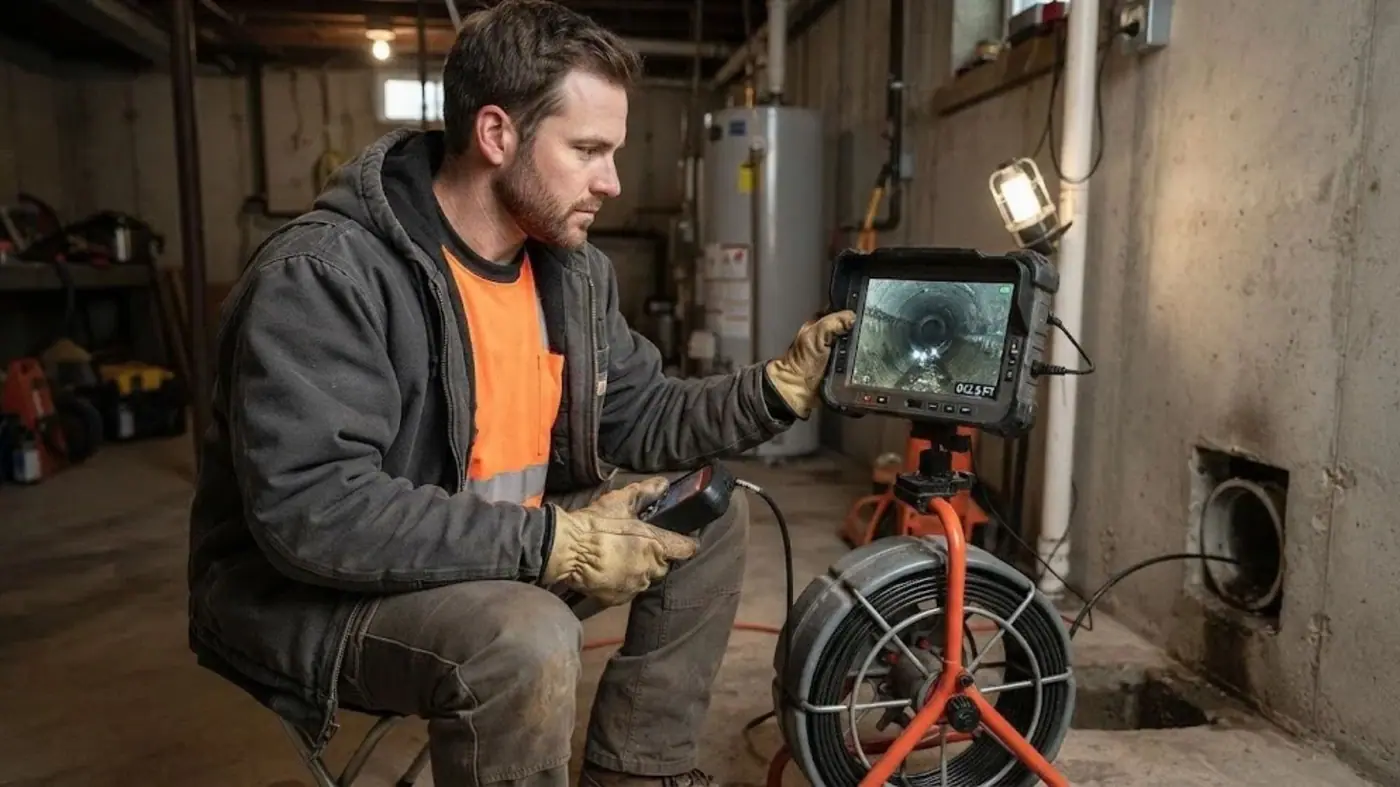
A good plan starts with a baseline camera run. The video shows the pipe material, the condition of the joints, any roots and any sag. With that picture, the plumber can tell you whether the line is a candidate for periodic cleaning or whether it needs repair first.
From there, set an interval based on what the camera found. A line with light root hairs at a few joints might need a cleaning every year or two. A clean line might go five years between looks.
Keep the video and the plumber's notes with your home records. If you sell, the history is a point in your favor, and if you buy, ask the seller for any camera video they have. Our sewer inspection page explains what the visit includes.
If you manage a rental or a small commercial building, the same plan works at a larger scale. Put the cleaning date in a calendar, record what the plumber found each time, and compare the notes year over year.
A line that needs a little more each visit is telling you the buildup is returning faster, and that is the moment to ask about a repair instead of another cleaning. A written history also gives a new plumber a head start if you ever change companies.
Stoneham's sewer system and your lateral
Stoneham's Public Works department operates about 75 miles of sewer main and five sewer pumping stations, and it handles sewer plug and odor complaints. Your lateral, the pipe from the house to the main, is your responsibility. A camera inspection shows whether a defect sits on your side or in the street.
If the camera shows a problem in the main, the footage with a depth mark helps Public Works. Neighbors in Melrose and Woburn should contact their own public works offices.
Want a local plumber to check your how often to clean a sewer line? Call now.
Call (339) 216-9771Frequently asked questions
It depends on pipe age, material, trees and history. A camera look turns a guess into a schedule.
For a line with roots or heavy grease, yes. For a clean modern line, no.
A skilled operator on a sound pipe will not. A damaged pipe can be harmed, which is why a camera comes first on old lines.
Look for a capped pipe a few inches wide in the basement or outside near the foundation.
The lateral from your house to the main is yours. The main under the street belongs to the town. A camera run marks which side a problem is on.
Questions about how often to clean a sewer line in your own house? Call and describe what you see.
Call (339) 216-9771