Most toilet repairs come down to five parts. Knowing what each does turns a vague complaint, such as the toilet runs on, into a specific, inexpensive fix. This guide walks through the tank, the bowl and the seal at the floor, with the symptom that points to each part.
If a toilet is overflowing in Reading or Wakefield or anywhere nearby, our toilet repair page lists the urgent steps and the 24/7 line.
Inside the tank: what each part does
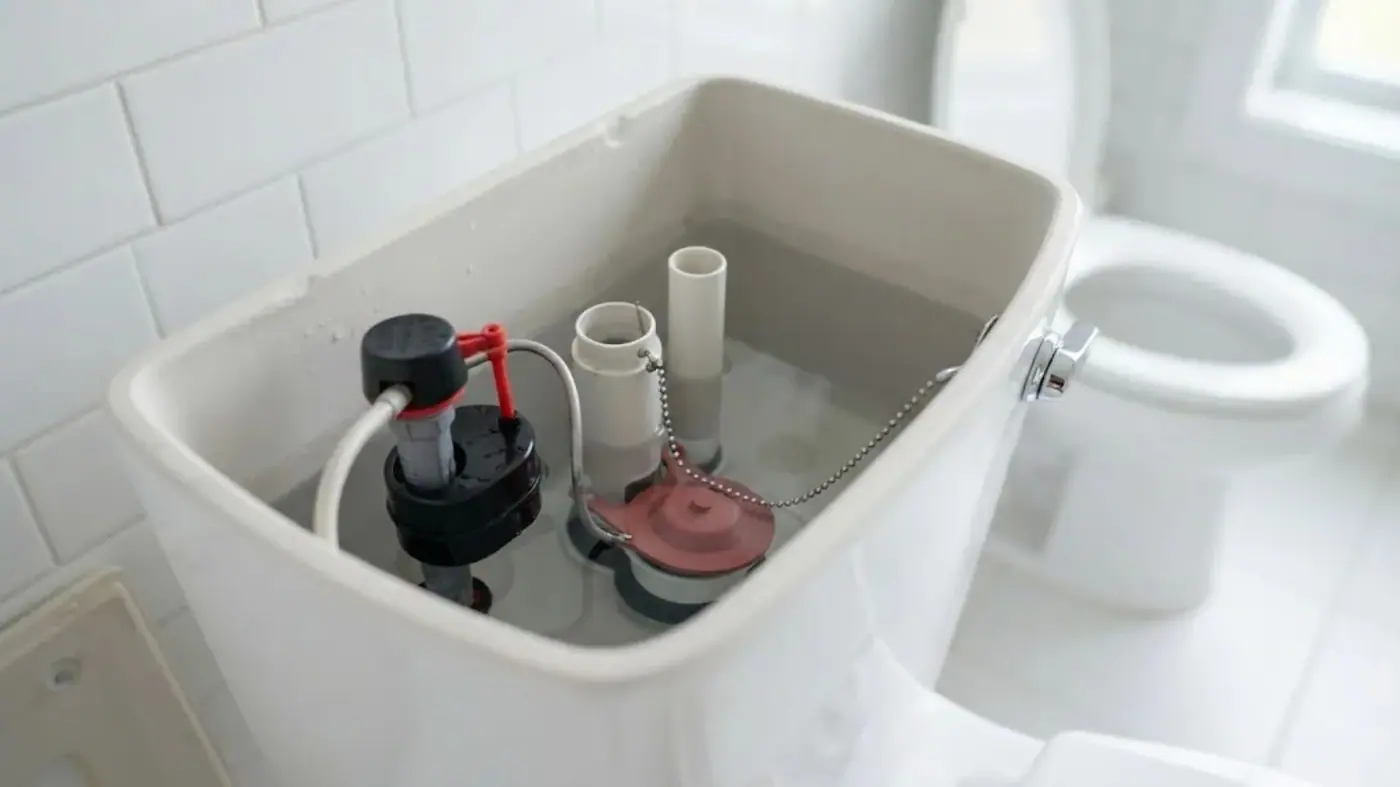
A tank is a simple machine, and the flapper and fill valve account for most of the trouble.
| Part | Job | Sign it is worn |
|---|---|---|
| Flapper | Seals the tank bottom, lifts to flush | Runs after flushing, phantom refills |
| Fill valve | Refills the tank and bowl after a flush | Hissing, slow fill, water over the overflow tube |
| Float | Tells the fill valve when to stop | Tank overfills or fills too little |
| Flush handle and chain | Lifts the flapper | Handle feels loose, chain too tight or too slack |
| Flush valve and overflow tube | Passes water from tank to bowl | Corrosion or cracks around the base |
Want a plumber to look at your toilet parts repair problem? A real dispatcher answers 24/7.
Call (339) 216-9771The food coloring test for a leaking flapper
Drop a few drops of food coloring into the tank and wait 15 minutes without flushing. If color shows in the bowl, water is leaking past the flapper. Replace it with the same style. Flappers are cheap, and the new one should seat firmly, with a little slack in the chain.
If the flapper looks fine but the toilet still runs, check whether water is rising to the top of the overflow tube. If it is, the fill valve is not shutting off and needs replacing.
Replacing a fill valve in four steps
Most fill valve kits include a diagram. If the tank bolts or the shutoff valve are corroded, stop and call a plumber, since forcing them can crack the porcelain.
- Turn off the shutoff valve behind the toilet and flush to empty the tank.
- Disconnect the supply line at the bottom of the tank and unscrew the lock nut under it.
- Lift out the old valve and set the new one to the same height as the old, using the manufacturer's height marks.
- Reconnect the line, turn the water on slowly and adjust the float so the water stops about an inch below the overflow tube.
The wax ring and a rocking toilet
The wax ring seals the base of the toilet to the drain flange. If water appears around the base, or the toilet rocks, the seal is suspect. Resetting a toilet means lifting it, scraping off the old ring, checking the flange, and setting the toilet on a new ring.
A cracked or low flange needs a repair first. A toilet that has leaked for a long time may have damaged the floor under it, so press the floor near the base. If it feels soft, have it looked at before the toilet goes back.
When to call a plumber
For recurring clogs that affect other drains, see drain cleaning. A toilet that is old and worn out may be cheaper to replace than to repair again.
- The shutoff valve will not close or leaks when turned.
- The bowl or tank is cracked.
- Water appears on the ceiling below the bathroom.
- More than one fixture is slow or gurgling, which suggests the main drain.
- You have replaced parts and the toilet still runs or clogs.
Choosing replacement parts that fit
Toilet parts look universal and are not. Flappers come in two-inch and three-inch sizes, and a three-inch drain needs the larger flapper. Fill valves differ in height, and a valve that is too tall will not fit under the tank lid. Tank bolts, gaskets and supply lines vary with the model.
The simplest way to avoid a second trip to the store is to photograph the inside of the tank and the label on the back, and to bring the old part with you.
Many toilets list the model on the inside of the tank lid or behind the seat. If the toilet is a decade or more old and parts are hard to match, a plumber can tell you whether a universal kit will do or whether replacing the toilet is the cleaner answer.
Toilet repair and Stoneham's water
Stoneham's water is supplied through the MWRA and is described as soft, at about 1 grain per gallon. Soft water leaves little mineral buildup on fill valves and flappers, so parts in Stoneham tanks tend to wear from age and chlorine exposure, and less often from scale. That is why the rubber flapper is the part most likely to fail first.
If you are not sure about your own water, ask Stoneham Public Works, which runs the town's water system. Homes in nearby Woburn and Wakefield should check with their own water departments.
Want a local plumber to check your toilet parts repair? Call now.
Call (339) 216-9771Frequently asked questions
A leaking flapper lets water slip into the bowl, and the fill valve tops up the tank every few minutes. Replacing the flapper usually ends it.
Flappers and fill valves commonly last several years, and many need replacing every five to ten years. Wax rings last as long as the toilet stays undisturbed.
No. Flappers come in different sizes and styles. Bring the old one, or note the brand and model of the toilet.
It is not dangerous in itself, but a rocking toilet can break its wax seal and leak under the floor. Tighten or reset it soon.
Older toilets with worn tank bolts, corroded shutoff valves and brittle supply lines are common. Replacing the valve and the line at the same time prevents a second visit.
Questions about toilet parts repair in your own house? Call and describe what you see.
Call (339) 216-9771