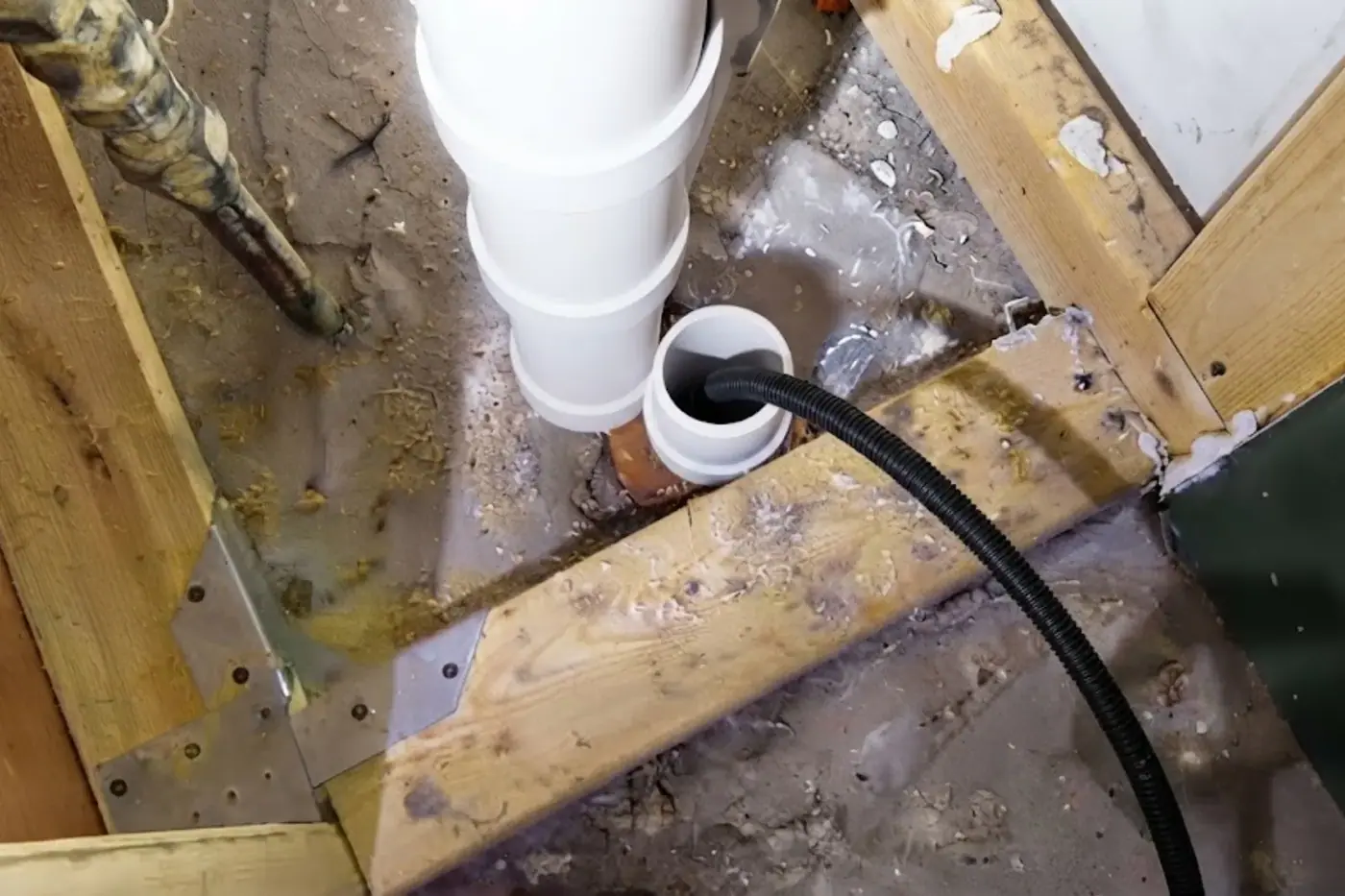
Every drain in a house needs air behind the water. The vent pipes that run up through the walls and out the roof supply that air, and when one clogs, water leaves the fixtures slowly and the traps can be siphoned empty. The fix is to clear the vent, and that usually means a ladder, a garden hose or a plumber's snake.
This guide explains how to clear a vent safely, what to do on the roof, and when to call a plumber. If you are also seeing slow drains in the house, see drain cleaning to rule out a main line clog.
What blocks a vent stack
The opening on the roof is the usual trouble spot. Leaves, nests and debris fall into the pipe, and in winter, frost can close the opening when warm moist air from the house freezes at the top of a small-diameter vent. Less often, a break or a sag in the pipe inside a wall blocks the airflow.
| Cause | Where | How it is cleared |
|---|---|---|
| Leaves and debris | Top of the roof vent | Remove by hand, flush with a hose |
| Nest or animal | Roof opening or upper pipe | Clear carefully, add a screen or cap |
| Frost closure | Roof opening in cold weather | Thaw with warm water, improve insulation |
| Internal blockage or sag | Inside the wall | Cable from the roof, repair if damaged |
Want a plumber to look at your unclog a plumbing vent problem? A real dispatcher answers 24/7.
Call (339) 216-9771Clearing the vent from the roof
Roof work is dangerous, especially on a steep pitch or in wet or icy weather. A plumber has the equipment and experience to do it safely, and that is the better choice if you are not comfortable at height.
- Choose a dry, calm day, and use a ladder rated for the load with someone holding it.
- Look into the vent opening with a flashlight. Pull out any debris you can reach.
- Run a garden hose down the pipe. If the water drains, the vent is clear. If it backs up, the blockage is lower.
- Feed a drain snake or cable down the pipe from the roof, turning it until it moves freely.
- Flush again with the hose and check that water flows down smoothly.
Safety, harnesses and when not to go up
A vent blocked by a nest may have a live animal in it, and that is a case for caution and wildlife guidance.
- Never go on a wet, icy or steep roof.
- Use a fall harness tied to a secure anchor where the pitch calls for it.
- Do not climb alone.
- Keep a hose and a snake coiled and ready so you are not reaching over the edge.
- Stop if the shingles are old and brittle, and call a professional.
After clearing the vent
Run several fixtures at once and listen for gurgling. If the drains are quiet and fast, the vent is working. If the problem remains, the main drain may be clogged, which a sewer line cleaning visit addresses.
Adding a screen or a cap with a wire mesh keeps leaves and nests out without blocking airflow. In cold areas, a larger-diameter vent opening is less likely to frost over.
Why not pour chemicals down the vent
Chemical drain cleaners are made for drains, not vents, and they do nothing for dry debris at the top of a pipe. They can also damage pipe fittings and endanger anyone working on the line later. Mechanical clearing and water are the right tools.
Tools and what each does
Clearing a vent uses simple tools. A garden hose with a spray nozzle flushes loose debris and tells you whether water drains freely. A drain snake with a flexible tip pushes through leaf mats and nests. A small mirror or a camera on a stick lets you see down the pipe without leaning over the edge.
Avoid a pressure washer or a rigid rod. Both can crack an old pipe or push debris deeper into a bend. If the hose test shows that the vent drains but the house still gurgles, the problem is probably the drain line and not the vent. A camera inspection of the main answers the question before you spend more time on the roof.
Vents, winter frost and Stoneham homes
In New England winters, a small vent opening is more likely to close with frost, and a vent that rarely gets looked at can fill with leaves in the fall. Public housing data put the typical Stoneham home at around the late 1950s, so many vent stacks have been collecting debris for decades.
If you plan to change or add vent piping during a remodel, ask the Stoneham Building Division what the permit requires. For homes in nearby Melrose or Reading, check with your own building office.
Want a local plumber to check your unclog a plumbing vent? Call now.
Call (339) 216-9771Frequently asked questions
Slow drains, gurgling sounds and sewer smells are the classic signs, especially when several fixtures act up at once.
Usually not. Vent pipes run up through the walls and out the roof, so access is from the roof opening.
Not usually, but a vent that breaks a trap seal can let sewer gas into the house. Fix it soon.
It can slow a toilet and cause bubbling. A full backup is more likely a drain clog, so have both checked.
Frost can close small vent openings in a hard cold snap. Thawing and a larger opening or cap helps.
Questions about unclog a plumbing vent in your own house? Call and describe what you see.
Call (339) 216-9771